Striped shirt outfits for women
How to wear a striped shirt — open over a tank, under a blazer, or tucked into trousers — with calm, wearable examples.
Pick a stripe that behaves
Pale blue and white, or soft navy and white, are easier than bold black-and-white candy stripes. A classic poplin stripe reads expensive even when the shirt is affordable. Oversized cuts look current; body-con stripes rarely do.
Button quality and collar shape matter more than the label. If the collar collapses, the whole outfit softens in the wrong way.
Looks to copy
Full outfits from Fit4You — each links to a share page with similar pieces on Amazon.
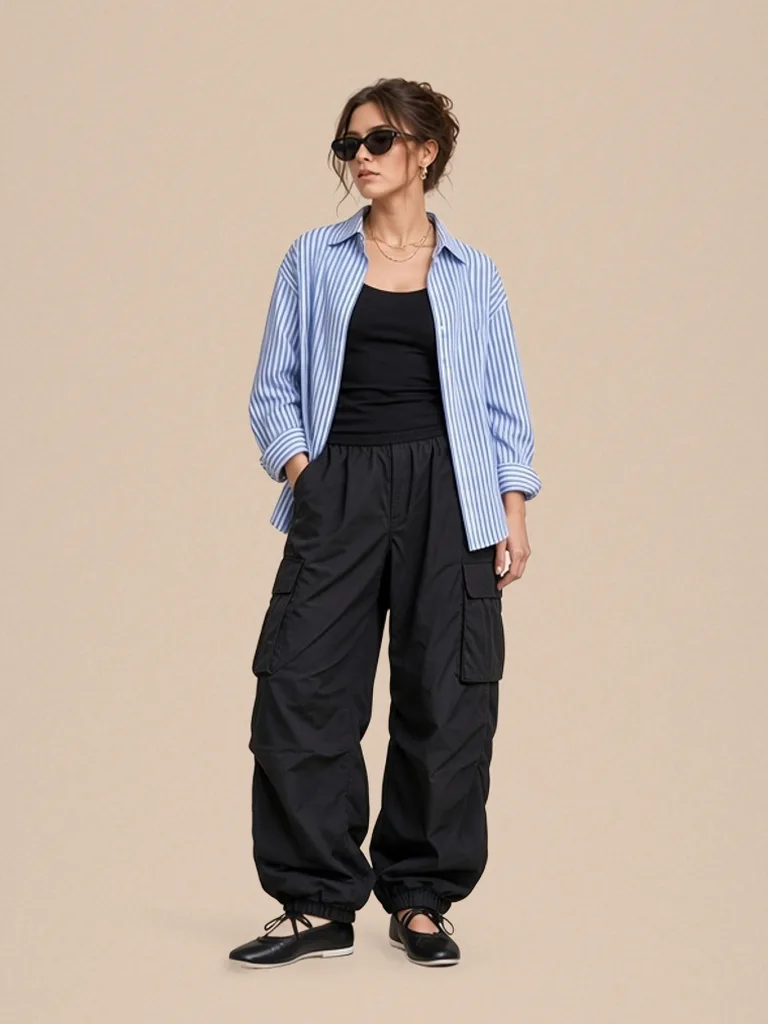
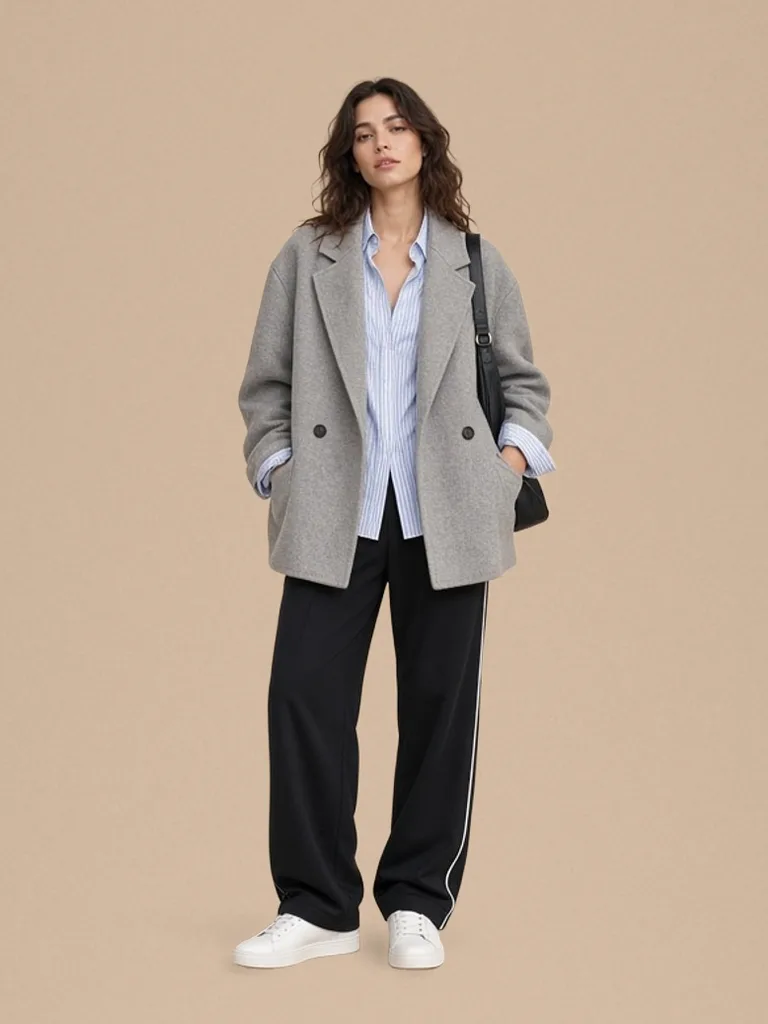
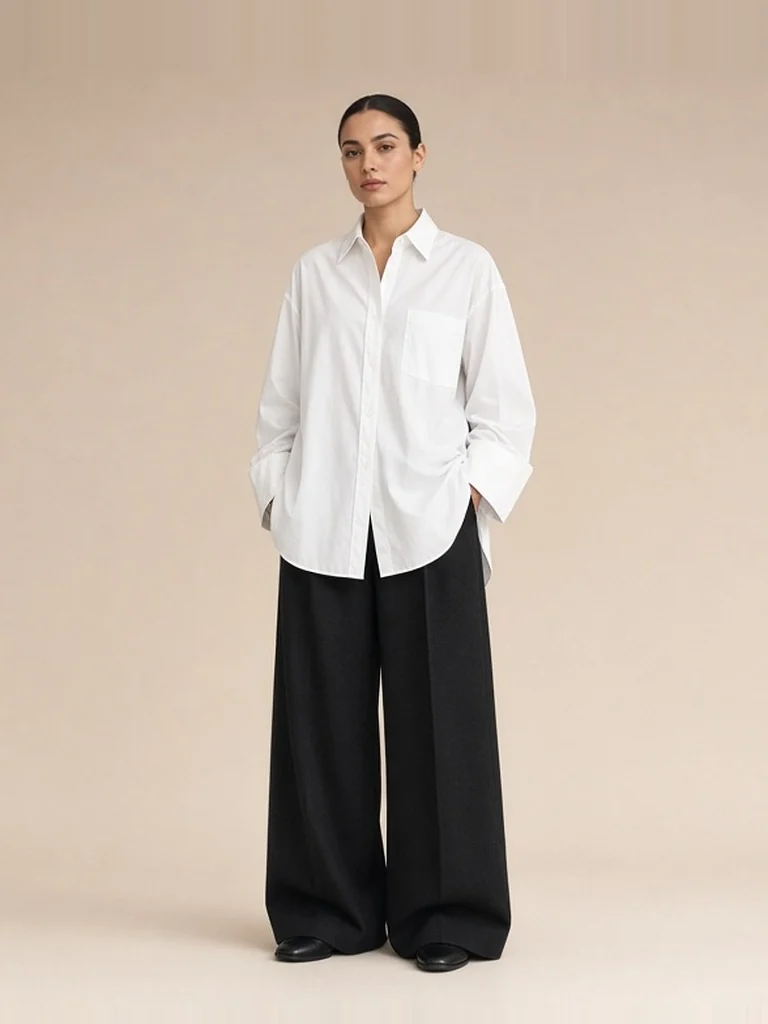
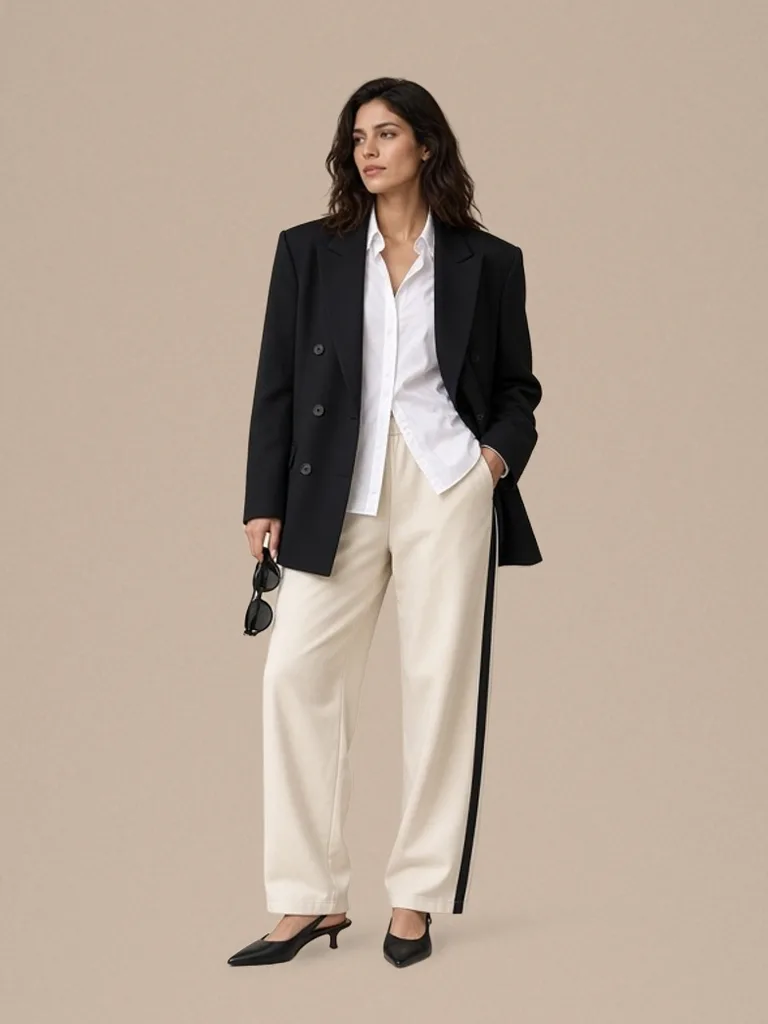
Three reliable ways to wear it
Open over a black tank with cargo or parachute pants for street ease. Buttoned under a grey or black blazer with track pants or wide trousers for polish. Worn alone, oversized, with black wide-leg wool trousers and mules for a quiet evening look.
Jewelry: thin layered necklaces when the shirt is open; almost nothing when the shirt is fully buttoned under a blazer. Sunglasses can replace a necklace as the accent.
Bottoms and shoes
Stripes already add pattern, so bottoms should be solid: black track pants, cream track pants, black wool trousers, or dark denim. Shoes in black or white keep the graphic clean. Ballet flats with cargos, sneakers with a blazer-and-track combo, mules with wide trousers — each pairing sets a different mood without changing the shirt.
Care and longevity
Wash cold and hang dry when you can so the stripe stays crisp. A light iron on the placket makes even a casual shirt look intentional under a blazer. If the shirt pills or shines, retire it from under-jacket duty and keep it for open-layer days only.
When you shop similar pieces, focus on fabric weight and length before brand names. A slightly heavier trouser hangs better. A coat that hits mid-thigh or below usually photographs cleaner than a short jacket over wide pants. If you are between sizes, size for the shoulders on jackets and the waist on pants, then tailor the rest.
Fit4You keeps styling notes short on purpose: calm clothes are easier to repeat. Save one outfit that works, then swap only one variable at a time — shoes one week, jacket the next — so you learn what actually changes the mood.
Tucking, French tucking, and leaving it out
A full tuck into high-rise trousers makes a striped shirt feel neat and slightly office-adjacent. A French tuck — front in, back out — softens the line and works with cargos and track pants. Leaving the shirt fully out is best when it is oversized and the hem hits mid-hip; much longer and you lose shape.
Open-shirt styling needs a finished layer underneath. A tank with clean armholes beats a stretched undershirt. If you wear necklaces, put them on before the shirt so the open placket frames them instead of fighting them.
Mixing stripes with outerwear
Grey, black, navy, and chocolate jackets are safest over blue-and-white stripes. Camel can work if the stripe is soft. Bright colored jackets usually compete. If your blazer has a strong shoulder, keep the shirt collar neat; a collapsed collar under a strong shoulder looks unfinished in photos and in mirrors.
For travel, a striped shirt earns its place because it dresses up with a blazer and down with tanks and flats. Pack one that you can wash in a sink and hang overnight.
FAQ
Horizontal or vertical stripes?
Classic shirt stripes are fine either way when the scale is small. Very wide horizontal stripes are harder to style under a blazer.
Can I wear stripes with prints?
Usually no. Keep the rest solid. A subtle texture like wool or leather is not a print and works well.
If you like these, see striped shirt and blazer outfits and cargo pants outfits for women.
As an Amazon Associate, Fit4You earns from qualifying purchases. Brand names are style references only; items are similar, not the brand. Prices on share pages are rough guides in USD.