Baggy jeans outfit ideas for men
How men can wear baggy and relaxed jeans without looking messy — jackets, tees, shoes and simple formulas.
Baggy is about drape, not size chaos
Baggy jeans for men should hang from the hip and thigh, then fall straight or with a slight taper — not cling, and not trip you. If the waist gaps badly, use a belt or size the waist correctly and keep the leg roomy. Stack a little fabric on the shoe if you like, but avoid a puddle that eats your height.
Washes that work: light-medium for spring, washed black or dark indigo for most of the year. High-contrast whiskering and heavy distressing make relaxed jeans look dated faster than a clean wash does.
Looks to copy
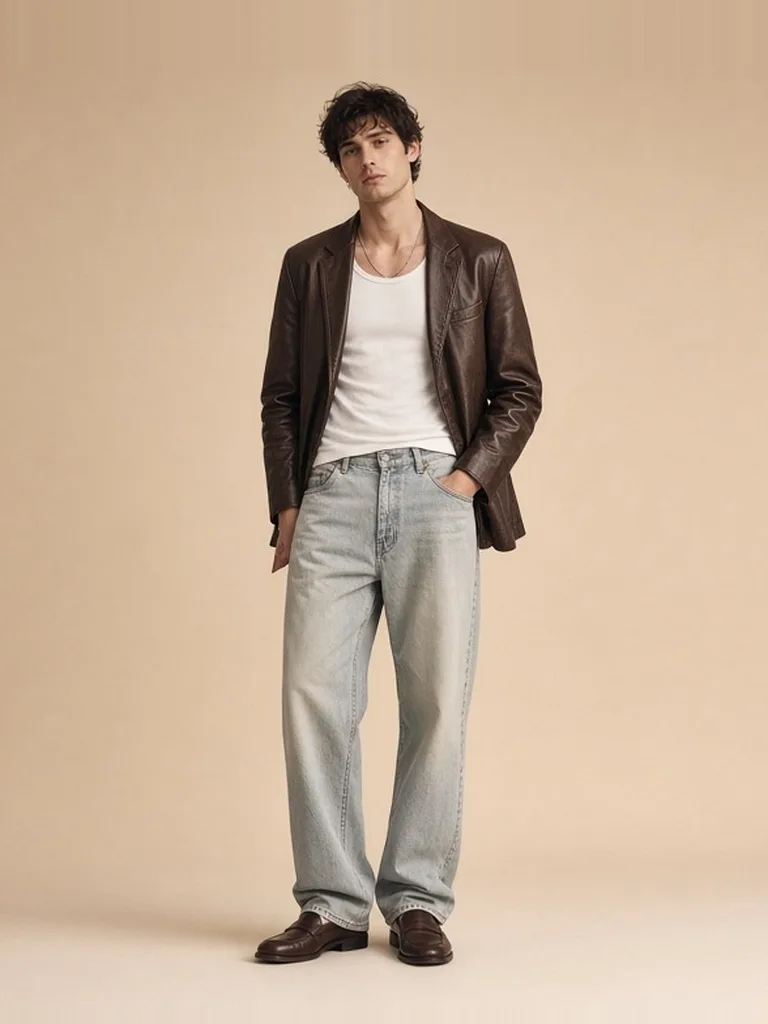
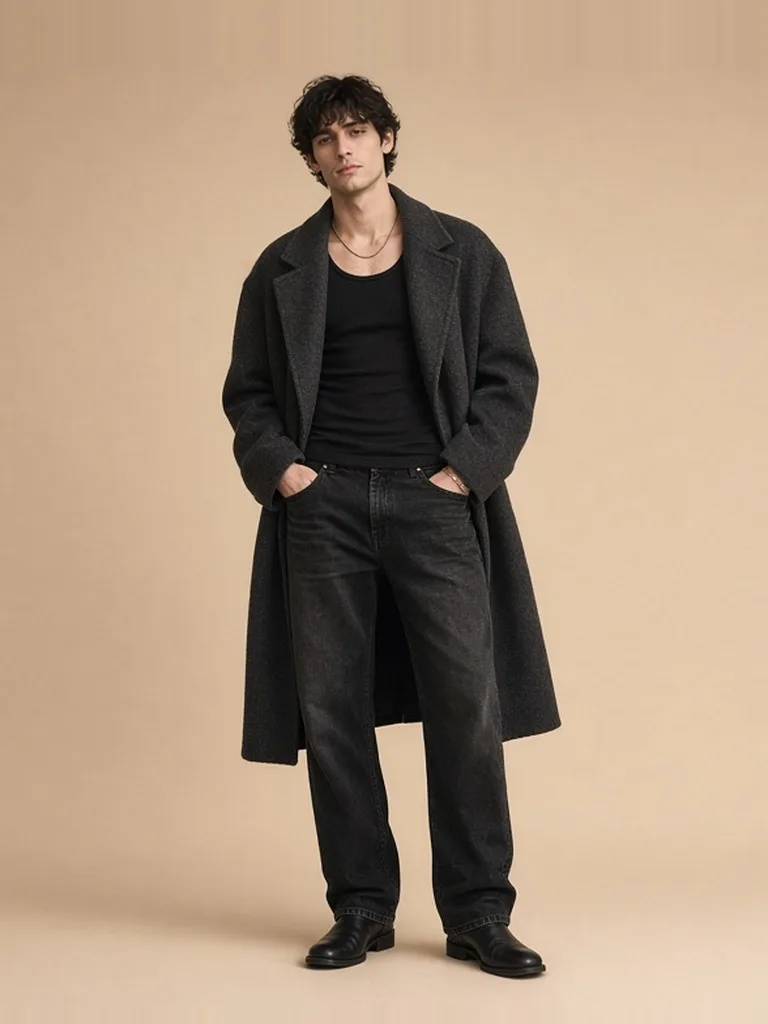
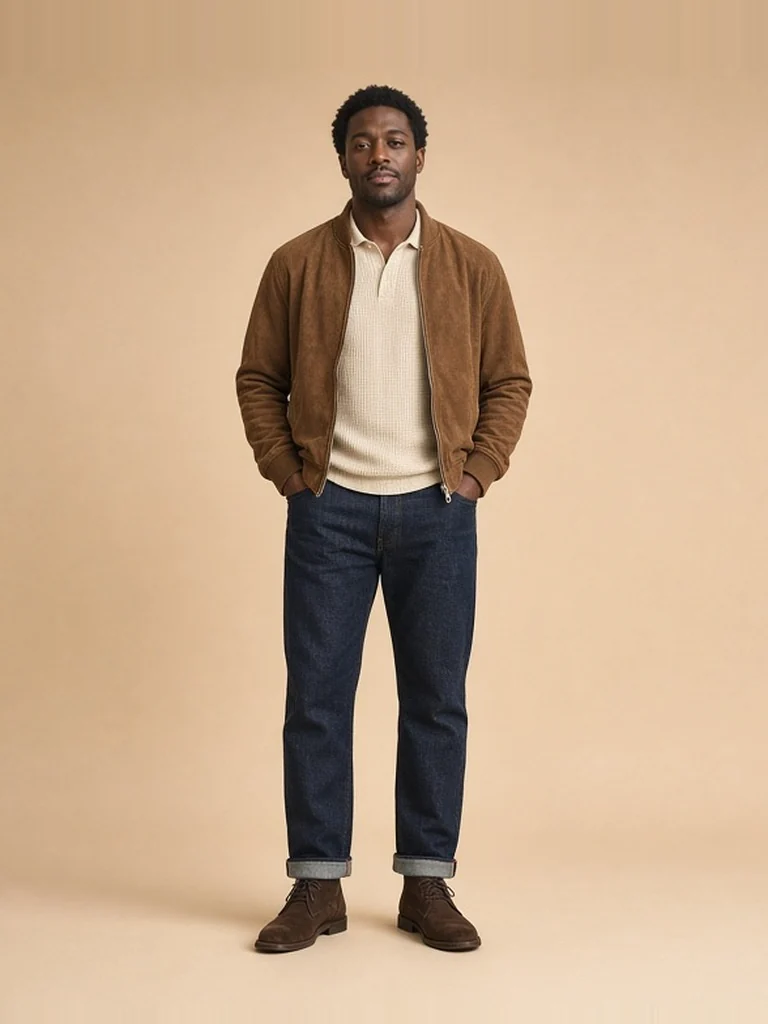
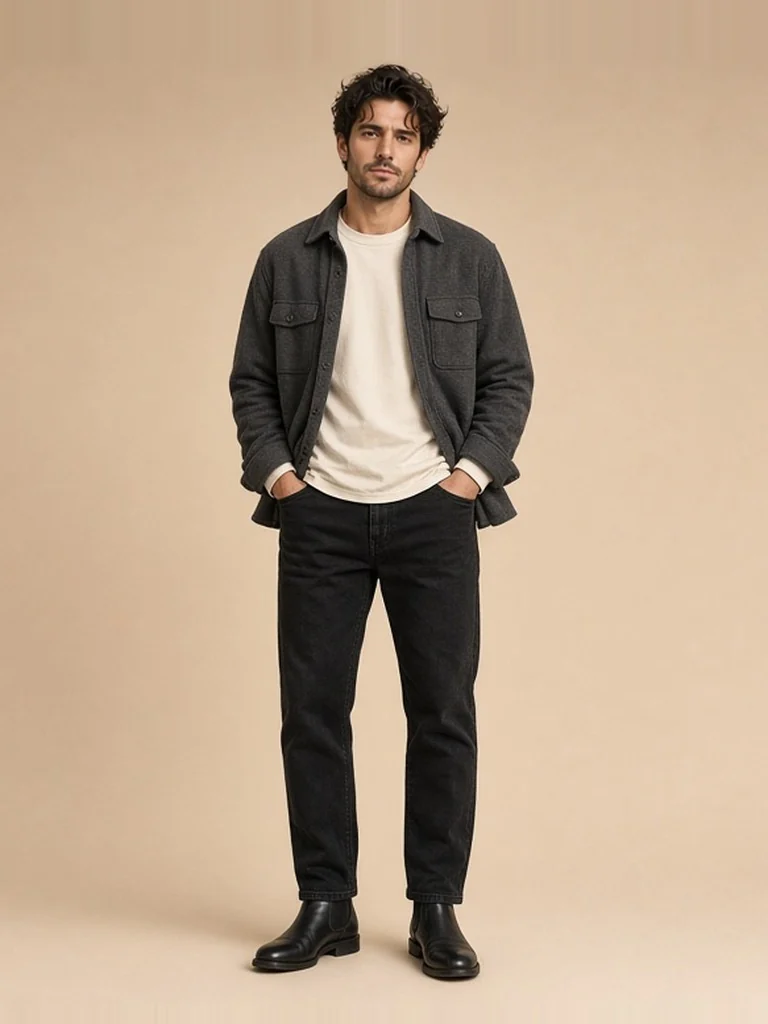
Full outfits from Fit4You — each links to a share page with similar pieces on Amazon.

Tops that balance wide denim
A white or ecru tee, a ribbed tank under a leather blazer, or a cream knit polo all give the upper body a clear shape. Overshirts and flannels work when left open. Very long, very wide shirts on top of very wide jeans can erase your outline — if both are loose, keep the shirt shorter or half-tuck once.
Outer layers that elevate baggy jeans: a brown leather blazer, a charcoal overcoat, a tobacco suede blouson, or a charcoal wool overshirt. One layer is enough for most days.
Shoes and the break
Loafers, Chelsea boots, clean leather sneakers, and chukkas all work. Bulky basketball shoes fight tailored jackets. If your jeans are long, a slight break on a loafer looks deliberate; if they are cropped, show a little sock or go no-show with sneakers.
For a simple weekend formula: ecru tee, open flannel or overshirt, wide khaki or denim, suede clogs or sneakers. For evening: black tank or knit, leather or wool jacket, washed-black jeans, black boots.
Mistakes to skip
Do not combine baggy jeans with a baggy logo hoodie and a ball cap unless you want a teenage silhouette. Do not size so large that the crotch drops mid-thigh. Do not pair filthy sneakers with an otherwise careful coat. Quiet luxury here means fabric and cut, not a brand shout.
When you shop similar pieces, focus on fabric weight and length before brand names. A slightly heavier trouser hangs better. A coat that hits mid-thigh or below usually photographs cleaner than a short jacket over wide pants. If you are between sizes, size for the shoulders on jackets and the waist on pants, then tailor the rest.
Fit4You keeps styling notes short on purpose: calm clothes are easier to repeat. Save one outfit that works, then swap only one variable at a time — shoes one week, jacket the next — so you learn what actually changes the mood.
How to buy baggy jeans that actually fit
Ignore vanity sizing. Measure a pair of pants you already like at the waist, rise, and thigh, then compare. Many “baggy” jeans are just long and wide at the hem while remaining tight through the seat — that is not the silhouette you want. Look for room in the thigh and a rise high enough that you are not tugging them up all day.
Try jeans on with the shoes you will wear. Boots lift the hem; sneakers drop it. Brand names matter less than whether the denim holds a crease of weight. Cheap stiff denim can still look good if the cut is right; floppy thin denim rarely does at a wider cut.
Layering for colder months
Under a charcoal overcoat, baggy black jeans and a ribbed tank or knit look sharp. Under a suede blouson, cream knit and indigo jeans feel weekend-ready. Avoid stacking a huge puffer, huge hoodie, and huge jean unless you are deliberately going for volume everywhere — most men look better with one oversized element at a time.
FAQ
Are baggy jeans formal enough for dinner?
With a leather blazer or overcoat, dark wash, and leather shoes, yes in many casual restaurants. Skip them for black-tie or strict offices.
What inseam should I buy?
Long enough for a slight break if you wear boots; a touch shorter for sneakers. Tailoring the hem is worth it when the leg width is right.
If you like these, see baggy and wide-leg jeans outfits and leather jacket street style for men.
As an Amazon Associate, Fit4You earns from qualifying purchases. Brand names are style references only; items are similar, not the brand. Prices on share pages are rough guides in USD.